
Strategic Use Cases
Stabilizing a Coastal Road Corridor Before the Storm Season
Dec
Context
A coastal road corridor serves as the primary lifeline between population centers, ports, health facilities, and emergency services on an island territory.
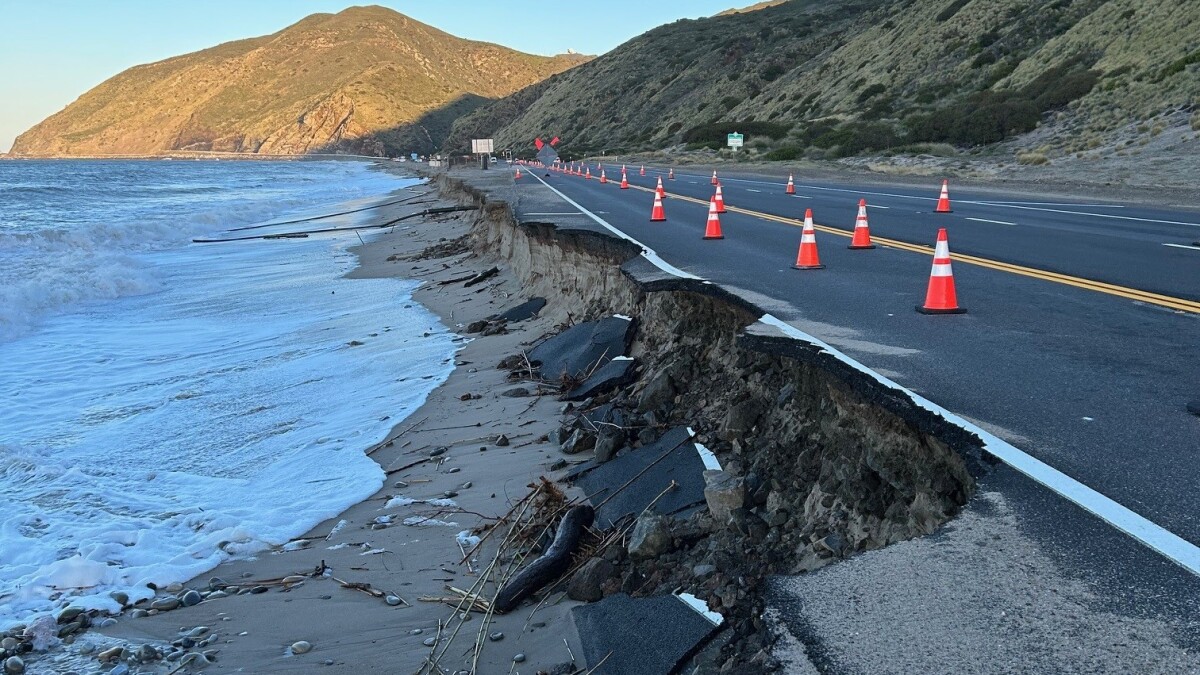
The corridor runs close to the shoreline and across low-lying sections exposed to erosion, flooding, and slope instability.
Disruptions were becoming more frequent — not through dramatic failures, but through repeated partial closures that strained mobility, logistics, and emergency response.
The Challenge
Decision-makers faced a familiar but dangerous situation:
-
Multiple weak points existed along the corridor, but not all carried the same continuity risk.
-
Technical reports focused on asset condition, while operators experienced disruption at specific interfaces (culverts, slopes, road shoulders).
-
With limited budgets and an approaching storm season, leadership lacked a defensible way to prioritize where to act first.
The key question was no longer “Is the corridor at risk?”
It was: “Where do we intervene now to prevent total loss of access?”
GeoSentinel Approach
GeoSentinel was engaged for a Decision Brief / Continuity Sprint focused on corridor-level continuity, not full rehabilitation design.
The engagement:
-
Identified choke points where small failures could sever access across large sections of the corridor.
-
Assessed how erosion, drainage failure, and slope movement interacted with traffic patterns and emergency routing.
-
Ranked locations based on continuity impact and urgency, not theoretical hazard magnitude.
Findings were synthesized into a decision-focused brief designed to support rapid alignment across engineering, operations, and leadership.
Decisions Enabled
The Decision Brief allowed leaders to determine:
-
Which segments required immediate stabilization before the storm season
-
Where temporary measures could safely defer larger works
-
How to sequence actions within a 30–90 day execution window
-
Which risks could be accepted short-term — and which could not
This shifted discussions from “everything is urgent” to clear, prioritized action.
Outcome
-
Targeted stabilization actions were identified and sequenced
-
Emergency access planning was clarified along vulnerable segments
-
Coordination improved between road agency, emergency services, and local authorities
-
Leadership gained a clear narrative to justify rapid intervention and funding allocation
The corridor moved from a posture of reactive closure to proactive continuity management ahead of peak climate exposure.
Why This Matters
For islands and coastal regions, a single corridor often carries disproportionate national risk.
Waiting for full rehabilitation can mean accepting repeated disruption — or sudden loss of access.
This use case shows how decision-first resilience, applied at corridor scale, protects mobility and safety before failure becomes unavoidable.
