
Strategic Use Cases
Protecting Airport Access Under Flood Pressure
Dec
Context
A coastal international airport relies on a single primary access corridor connecting terminals to the city, emergency services, and cargo logistics.
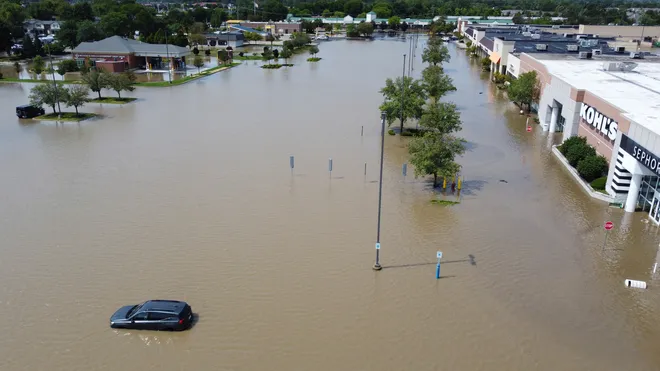
Seasonal rainfall and extreme weather events increasingly cause localized flooding, leading to access disruptions during peak operational periods.
While flooding incidents were not catastrophic individually, their frequency and timing created growing operational and reputational risk.
The Challenge
The airport authority faced three compounding issues:
-
Flood exposure was known but diffuse — multiple low-lying segments, drainage constraints, and interface points with urban infrastructure.
-
Operational teams reacted to incidents, but no shared prioritization existed across engineering, operations, and emergency response.
-
Decisions were repeatedly delayed because the question was unclear:
Which failures actually threaten continuity, and which can be tolerated short-term?
Traditional studies existed, but they did not translate into clear, near-term decisions.
GeoSentinel Approach
GeoSentinel was engaged for a Decision Brief / Continuity Sprint focused explicitly on airport access continuity, not asset condition in isolation.
The engagement:
-
Identified critical choke points where minor flooding triggered disproportionate operational disruption.
-
Mapped how access failures propagated across passenger flow, cargo timing, and emergency response.
-
Ranked exposure based on continuity impact, not theoretical hazard severity.
Outputs were consolidated into a board-ready Decision Brief, designed to support immediate coordination and funding discussions.
Decisions Enabled
The Decision Brief allowed leadership to answer, clearly and defensibly:
-
Which access segments must be stabilized before the next storm season
-
Where limited resources would reduce disruption fastest
-
Which temporary measures were acceptable — and which were not
-
How to sequence actions over a 30–90 day horizon
For the first time, operations, engineering, and leadership aligned around the same priority map.
Outcome
-
Short-term stabilization actions were prioritized ahead of peak weather exposure
-
Contingency routing and response plans were clarified
-
Internal coordination improved across operational units
-
Leadership gained a clear narrative to engage partners and funding stakeholders
The airport moved from reactive disruption management to proactive continuity protection — without waiting for a multi-year capital program.
Why This Matters
For island and coastal airports, access is the airport.
Even minor, repeated disruptions can have outsized economic and safety consequences.
This use case illustrates how decision-first resilience, applied at the right scale and timeframe, can protect continuity before disruption becomes unavoidable.
